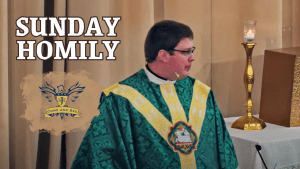
Father Randy Koenigsknecht
Watch the Homily
Listen to the Homily
On the Second Sunday of Lent, the Church gives us the Transfiguration—a powerful reminder that Lent is built on hope. This reflection explores how Christ’s glory strengthens us for suffering, how Abraham models perseverance through failure, and why prayer, fasting, and almsgiving are steps toward eternal life.
Read the Homily
Today’s Gospel presents one of the pinnacle moments in the life of Jesus: the Transfiguration. It is one of those great milestones when Christ’s divine glory is revealed to a select group of His disciples. Every Second Sunday of Lent, we hear this account.
Why? Why is the Transfiguration so important that the Church gives it to us every Lent?
At first glance, it may seem like a departure from the normal Lenten themes of repentance, humility, and penance. But the Church places the Transfiguration here to remind us that while Lent certainly is about repentance—turning our lives over to God more fully through prayer, fasting, almsgiving, confession, and seeking His mercy—it is also a season founded upon hope.
Hope is trusting in what God has promised. It is believing what He has said. Lent reminds us what God has done for us: that for our sake He came to live among us, to suffer and die for us, and to rise from the dead. Through His Resurrection, He promises us new life if we follow Him.
Lent teaches us to make that journey of suffering with the Lord. Just as He walked the Way of the Cross, we pick up our own crosses each day. We walk beside Him because we believe His promise—that if we follow Him, we will have renewed life now and eternal life when our earthly life ends.
This is the hope upon which Lent is built.
Hope is not wishful thinking. Hope is certain. Scripture describes it as an anchor that holds us fast. It allows us to stand firm on God’s promise of abundant life, even when we suffer or when God seems distant. Hope directs our gaze toward what will be if we remain faithful.
The Transfiguration instills that hope. Jesus brings Peter, James, and John up the mountain so they can see who He truly is—not merely a prophet or teacher, but God in splendor, majesty, and glory. Soon after, these same disciples will see Him arrested, tried, and brutally executed. The Transfiguration prepares them for that storm. It is a sign of the Resurrection to come. It assures them that death will not have the final word.
In the face of despair, they will have this memory to cling to.
The first reading gives us another model of hope: Abraham. God makes incredible promises to him—promises of a great nation and blessings for the whole world. Yet Abraham is far from perfect. He repeatedly struggles to trust. He hedges his bets. He tries to secure outcomes on his own rather than relying fully on God.
Abraham is relatable.
But Abraham perseveres. He grows. The man we meet early in Genesis is not the same man we see later. Through many failures and renewed acts of trust, he becomes a man of faith and hope. Even in darkness, he learns to stand on God’s promises.
Lent is difficult. Prayer can feel dry. Fasting brings discomfort. Almsgiving requires sacrifice. We are not doing these things because we love suffering, nor because God delights in our discomfort. We do them to deepen our union with Him. We make space in our lives so that His life can grow within us.
The Transfiguration reminds us where we are headed. There is more to this life than passing things. God is worth it. His promise is real.
Abraham reminds us to keep coming back. No matter how many steps backward we take, what matters is that we return. God promises mercy to repentant hearts. He is the Good Shepherd who carries us home.
Hope sees not only who we are now—with our faults and weaknesses—but who we are becoming. If we continue taking steps with the Lord, we are exactly where we need to be, even if we are not yet where we will remain.
Lent is a season of steps. Simple steps of prayer, fasting, and almsgiving. Steps that strip away obstacles and draw us closer to God.
Take the next step today. Take another tomorrow. If we keep returning, if we keep trusting, He will lead us to new life—and ultimately, to life with Him for eternity.